
Reimagine AI-driven Drug Discovery with Pharmaceutical Superintelligence
Explore how AI-driven drug discovery is evolving through Pharmaceutical Superintelligence and what your organisation can do to keep up.


Explore the critical differences between preclinical vs clinical research, and how closing the translation gap can reduce drug development attrition and improve R&D decision-making.
Less than 12 per cent of compounds that make it to Phase I clinical trials actually end up getting regulatory approval. Deciding to move a drug from preclinical tests to clinical research is therefore one of the toughest calls in pharmaceutical development.
At this point, the question is not whether a compound is “ready,” but whether the underlying evidence is sufficiently predictive of human outcomes to justify clinical risk. In an environment where Phase II failure remains structurally high, the quality of preclinical decision-making has become a primary determinant of R&D productivity.

Preclinical research tests a compound's safety and biological activity in the laboratory and in animal models before any human testing, whereas clinical trials test the compound in human participants under regulatory oversight across four formally designated phases.
The distinction matters because the two stages have fundamentally different objectives, regulatory frameworks, cost structures, and risk profiles. Conflating them, or using preclinical results to make unqualified assessments about clinical outcomes, is a primary driver of pipeline attrition.
|
Dimension |
Preclinical |
Clinical |
|
Objective |
Establish safety, PK/PD profile, and biological activity in non-human systems |
Determine safety, efficacy, optimal dosing, and adverse events in humans |
|
Study subjects |
In vitro cell lines, in vivo animal models, computational models |
Human volunteers or patients (Phase I–IV) |
|
Regulatory framework |
Good Laboratory Practice (GLP); feeds IND application data package |
Good Clinical Practice (GCP); governed by FDA 21 CFR Parts 312 and 314, ICH E6 |
|
Typical duration |
2–4 years depending on therapeutic area and indication |
6–12 years across all four phases combined |
|
Average cost |
$5 million to $40+ million per programme* |
$300 million to over $2.8 billion across Phase I–III* |
|
Primary attrition cause |
Toxicity, poor PK/PD, lack of in vivo efficacy |
Efficacy failure (45–50%), safety (30%), commercial/strategic decisions (10%) |
|
Reversibility of failure |
High: Failure is low-cost and does not involve human harm |
Low: Phase II/III failures are expensive and occasionally involve patient adverse events |
* Tufts Center for the Study of Drug Development report estimates.
In summary, preclinical research is designed to de-risk human exposure; whereas clinical trials are designed to prove efficacy and safety in real people.

The Investigational New Drug (IND) application is the formal gateway between preclinical and clinical research. But from an executive standpoint, it is better understood as a risk conversion point, where relatively low-cost uncertainty becomes high-cost exposure.
Before a sponsor can submit an IND application to the U.S. Food and Drug Administration (FDA) or equivalent regulatory authority, preclinical research must generate a specific data package that addresses three core questions:
These activities are often referred to collectively as IND-enabling studies, representing a defined milestone in the drug development process.
IND-enabling programmes integrate toxicology, pharmacokinetics, pharmacodynamics, and manufacturing readiness into a single, decision-critical package designed to support first-in-human dosing.
For leading pharma organisations, this phase is no longer treated as a regulatory formality, but rather as a strategic filter. The objective is not only to satisfy submission requirements but also to determine whether a compound has a sufficiently robust and predictive evidence base to justify entry into clinical development.
The FDA has 30 days to review an IND submission and place the application on clinical hold if the preclinical data package is insufficient.
In practice, the quality of preclinical evidence is the primary determinant of a smooth IND review. Regulators assess completeness. They do not assess predictive validity. That burden sits squarely with the sponsor and is where most strategic errors occur.
The translation gap is the disparity between results in preclinical models and outcomes in human trials. It is the most consequential challenge in drug development. Understanding why preclinical models succeed and fail at predicting clinical results is essential for interpreting preclinical data packages.
In vitro cell-based assays provide high-throughput, mechanistically defined data at relatively low cost. They are the first line of evidence for target engagement and cytotoxicity.
Their primary limitation is physiological reductionism: For example, a two-dimensional cancer cell line lacks the tumour microenvironment, vascularisation, and immune interactions that determine clinical drug response in vivo.
Rodent and non-rodent animal models provide integrated systems data on pharmacokinetics, pharmacodynamics, and toxicology.
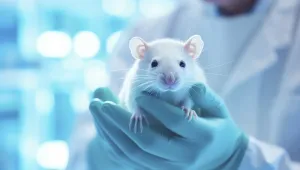
Their principal limitation is species specificity: Human CYP enzyme metabolism, immune responses, and receptor pharmacology differ sufficiently from rodents that animal data cannot be directly extrapolated to human dose predictions.
Approximately 50–60% of Phase II failures are driven by lack of efficacy, much of which reflects insufficient predictive preclinical pharmacology and target validation.
Physiologically based pharmacokinetic (PBPK) modelling and in silico toxicity prediction tools have improved significantly and now contribute formally to IND data packages.
Their role is to fill gaps in experimental data, particularly for first-in-class mechanisms where animal models have limited predictive validity.
The FDA and European Medicines Agency (EMA) both accept PBPK modelling as supporting evidence in regulatory submissions, though not as a standalone substitute for experimental in vivo studies.
Once an IND application is accepted, the clinical development programme proceeds through four sequentially gated phases, each with a distinct primary objective:
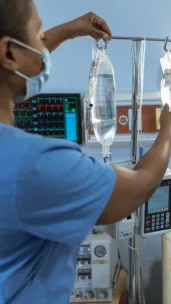
The transition to first-in-human (FIH) studies represents the single highest uncertainty point in the drug development lifecycle.
At this point, compounds move from controlled, model-based systems into human testing, where variability in genetics, disease state, and comorbidities can fundamentally alter drug response.
Critically, the risk at FIH is not limited to safety. It is the first real test of whether preclinical pharmacology translates into clinically meaningful exposure and biological effect.
As a result, the quality of IND-enabling evidence directly determines not only the safety profile observed in Phase I but also the probability that early clinical signals will be interpretable and actionable in later phases.
The translation gap is the technical term for the systematic divergence between preclinical findings and clinical results. It is not a failure of preclinical science per se but a consequence of the biological distance between model systems and human patients.
Three specific sources of translation failure account for the majority of Phase II attrition:
For senior R&D leaders, the critical question is not whether the data meets regulatory requirements but whether the data supports confidence in a clinical hypothesis.
The FDA's IND guidance specifies the minimum data requirements for IND submission but does not prescribe a pass/fail threshold for preclinical evidence quality.
The sponsor's judgement about the strength of the preclinical case, particularly the mechanistic plausibility of the pharmacology and the relevance of the animal model, is therefore a critical strategic input that no regulatory checklist can fully replace.
Programmes that advance to clinical testing with weak mechanistic evidence, over-reliance on a single animal model, or unresolved ADMET liabilities carry a substantially higher probability of Phase II failure. The cost is not just financial: A failed Phase II trial delays the development of genuinely effective treatments for the patients who need them.
This requires moving beyond checklists toward multi-dimensional judgement:
Advancing a compound without resolving these questions does not accelerate development. It shifts failure downstream, where it becomes exponentially more expensive.
The traditional view of preclinical-to-clinical transition as a linear progression is increasingly outdated.
Modern high-performing organisations are shifting toward:
The objective is not to eliminate failure but to ensure that failure occurs early, cheaply, and informatively.
The boundary between preclinical research and clinical trials is no longer a simple handoff. It is a strategic checkpoint that determines whether a programme is built on predictive science or optimistic extrapolation.
In a landscape defined by rising development costs, increasing biological complexity, and persistent attrition, the organisations that outperform will not be those that move fastest into the clinic, but those that enter the clinic with the highest quality of evidence.
At Pharmatica, we focus on the decisions where scientific insight, operational execution, and strategic judgement intersect. Our analysis is designed to help pharmaceutical leaders identify where pipeline risk is truly created and how to reduce it before it compounds downstream.
Pharmatica: Insight. Connection. Impact.
No, preclinical research is not the same as clinical research. Preclinical studies test compounds in laboratory and animal systems to establish safety and biological activity before any human exposure. Clinical research tests compounds in human participants under formal regulatory oversight across Phase I through Phase IV trials.
The transition from preclinical to clinical development is triggered by the acceptance of an Investigational New Drug (IND) application by the FDA or equivalent regulatory authority. IND acceptance requires a complete preclinical data package covering toxicology, pharmacokinetics, pharmacodynamics, and the proposed clinical protocol.
The majority of preclinical-to-clinical failures are caused by the translation gap: The biological distance between animal models and human patients. Non-predictive preclinical models, poor patient stratification, and dose translation errors collectively account for the majority of Phase II attrition. Efficacy failure, not unexpected toxicity, is the primary cause of late-stage clinical attrition.
Preclinical research typically costs $5 million to $40 million per programme, though fully capitalised estimates, including failed candidates, can exceed $200 million, depending on the therapeutic area, number of species studied, and duration of toxicology studies. Clinical trials are substantially more expensive: Phase I to III clinical development typically costs $300 to 600 million out-of-pocket, rising to $1 to 2.8 billion when accounting for failure risk and cost of capital for large, long-duration programmes.
Good Laboratory Practice (GLP) is the set of regulatory standards that govern the conduct, recording, and reporting of non-clinical safety studies submitted in support of IND applications. GLP-compliant preclinical studies are required by the FDA and EMA to ensure data integrity and reproducibility. Studies conducted without GLP compliance are not accepted as part of a formal regulatory submission.
Why not support Nicole Dale by giving this content a like
Comments (0)