
Reimagine AI-driven Drug Discovery with Pharmaceutical Superintelligence
Explore how AI-driven drug discovery is evolving through Pharmaceutical Superintelligence and what your organisation can do to keep up.


Digital twins in clinical trials simulate patient outcomes to reduce risk and accelerate timelines. Learn how sponsors use them for predictive trial design.
Drug development has always been defined by high risk, but by simulating outcomes before enrolment, sponsors can design smarter trials, reduce attrition, and accelerate regulatory pathways. Digital twins in clinical trials are virtual models that replicate patient biology, disease progression, and trial conditions. They are reshaping clinical drug development.
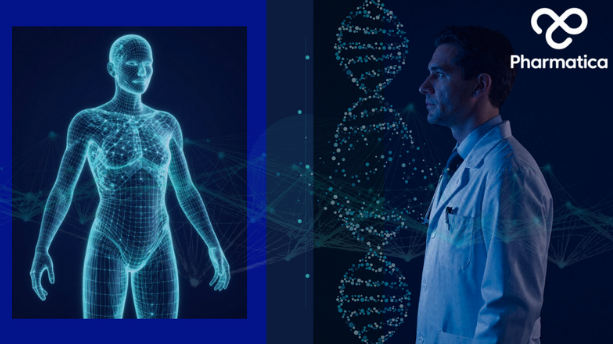
A digital twin in clinical trials is a dynamic, data-driven model that mirrors the characteristics of a patient or patient population.
Unlike static simulations, digital twins evolve in real time, integrating data from genomics, imaging, electronic health records (EHRs), and wearable devices.
In clinical development, digital twins can:
This predictive capability allows sponsors to test hypotheses virtually, reducing reliance on costly trial-and-error approaches.

The applications for digital twins in drug development include the following:
Digital twins help identify which patients are most likely to respond to a therapy. By modeling genetic, metabolic, and lifestyle factors, sponsors can enrich trial populations and reduce null efficacy results.
Simulated models predict how different dosing strategies affect efficacy and safety. This reduces the risk of late-stage failures caused by suboptimal dosing.
Sponsors can run “virtual trials” to test endpoints, recruitment strategies, and statistical power before committing resources. This improves protocol design and reduces amendments.
Regulators are beginning to explore how digital twins can supplement evidence. While not yet a standalone pathway, digital twins can strengthen submissions by providing predictive data aligned to real-world outcomes.
The benefits of digital twins in clinical trials are numerous and mainly aligned to the following:
Attrition is the defining risk of drug development. By simulating patient outcomes, digital twins help sponsors identify ineffective compounds earlier, reducing costly Phase II and III failures.
Virtual modeling accelerates protocol design, recruitment strategies, and endpoint selection. Sponsors can move from hypothesis to trial launch more quickly.
Digital twins allow sponsors to test dosing and safety scenarios virtually, reducing the risk of adverse events in early-phase trials.
Predictive evidence strengthens submissions by demonstrating how therapies perform across diverse populations, complementing traditional trial data.

The integration of digital twins for more successful clinical trial design faces many challenges, including:
Digital twins require vast datasets from genomics, imaging, EHRs, and wearables. Integrating these sources into a coherent model is technically complex.
Regulators demand transparency and reproducibility. Digital twin models must be validated across diverse populations to avoid bias.
While regulatory agencies are exploring digital twin evidence, formal pathways remain limited. Sponsors must engage early to align expectations.
Building and maintaining digital twin platforms requires cross-functional expertise in data science, clinical operations, and regulatory affairs.
Digital twins require structural integration into clinical trial design and portfolio planning. For successful digital twin integration into clinical trials, leaders must:
Build Cross-Functional Teams: Collaboration between data scientists, clinicians, and regulatory experts is critical.

Digital twins represent a paradigm shift in clinical development, offering predictive power before the first patient is enrolled. By simulating outcomes, sponsors can reduce attrition, accelerate timelines, and strengthen regulatory submissions.
Pharmatica provides the strategic intelligence that connects digital twin innovation to real-world R&D decisions, enabling leaders to simulate, validate, and deliver with clarity.
Pharmatica: Insight. Connection. Impact.
A digital twin is a virtual model that replicates patient biology and trial conditions, used to simulate outcomes before enrolment.
Digital trials predict drug response, optimise dosing, and simulate trial outcomes, reducing clinical trial attrition risk and late-stage failures.
Agencies are exploring digital twin evidence in clinical trials, but formal pathways remain limited. Early engagement is essential.
Data integration, validation, regulatory uncertainty, and operational complexity are the main hurdles for the adoption of digital twins in clinical trials.
No, digital twins cannot replace traditional clinical trials. However, they complement traditional trials by improving design, reducing risk, and strengthening submissions.
Why not support Nicole Dale by giving this content a like
Comments (0)